Chestnuts, Persimmons, and the Countdown to New Year: Reading Shinbashi's Winter Candy Shelf
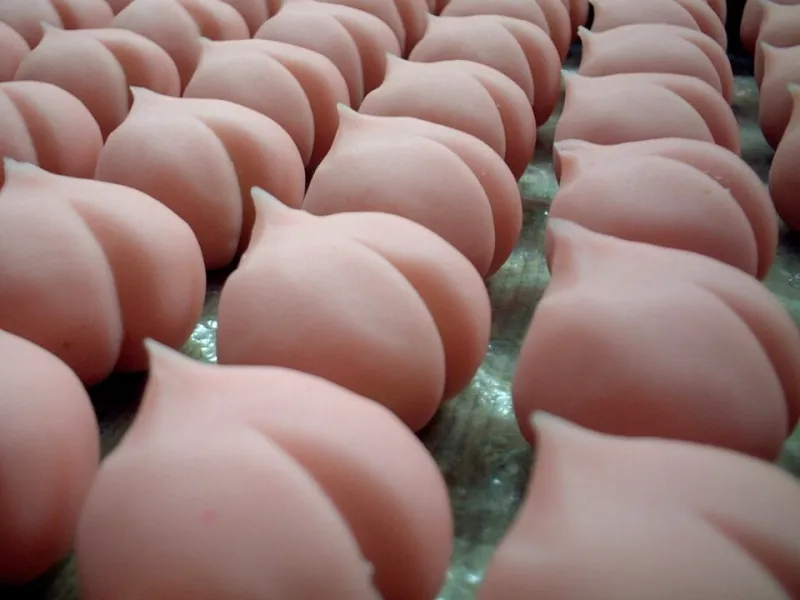
Photo: Juni from Kyoto, Japan, CC BY 2.0, via Wikimedia Commons
When the air over Shinbashi turns sharp and office workers start walking with their shoulders up around their ears, the candy shops rearrange themselves. No announcement, no signage campaign. But somewhere in early November, the lemon drops and cold ramune candies start losing shelf space to chestnuts, persimmons, and sweet potatoes, and by mid-December a whole corner of the shop has gone red-and-white for New Year.
If you're in Tokyo for the tail end of 2026, this is arguably the best window of the year to browse. The shelves are more interesting than in summer, the crowds are thinner than in cherry-blossom season, and everything is quietly telling you what month it is. Here's how to read the cues and what's actually worth buying.
How a Japanese sweets shop tells you the season
Japanese confectionery runs on shun — the idea that an ingredient is at its best for a short, specific stretch, and that eating it outside that window is a little pointless. Shops broadcast this in ways that are easy to miss if you don't know to look.
Watch for three things. First, small handwritten cards or plastic stands next to a product, usually carrying the phrase kisetsu gentei (seasonal limited). That's your strongest signal. Second, the color of the display itself: autumn means maple leaves, persimmon orange, and dark browns; by December the palette shifts to red and white, pine, and gold. Third, the wrapping paper. When a shop changes its paper and its little paper bags, the season has officially turned.
One more cue that matters for shoppers: staff rearrange shelves early in the morning. Go before 11 a.m. and you'll see the new season's stock already in place but not yet picked over.
The late-autumn lineup
Chestnut (kuri). The headliner from late September through December. You'll see chestnut yokan (a dense sweet bean-and-chestnut block), chestnut-filled manju, and candied chestnuts that sit somewhere between a marron glacé and a hard candy. Chestnut sweets are rich and slightly savory — closer to a Thanksgiving dessert than to a gummy bear.
Sweet potato (imo). Imo kenpi is the one to know: sweet potato cut into thin sticks, fried, and coated in sugar. It's crunchy, cheap, sold in bags, and dangerously easy to finish on a train. It's also one of the most travel-friendly things on the shelf.
Persimmon (kaki). Less common as a candy and more common as a dried fruit or a soft confection. Hoshigaki — dried persimmon — shows up in nicer shops and tastes like caramelized apricot with a chewy, almost jelly-like center.
Maple and autumn-leaf motifs. Momiji-shaped sweets, often a pressed sugar or a soft bean paste, exist mostly for the photograph. Buy one, eat it, move on.
What to eat first, second, and last
Seasonal sweets are not equal in lifespan, and buying them in the wrong order means throwing money away.
Eat first: anything soft, fresh, or sold unwrapped — fresh manju, soft mochi-based pieces, anything the shop warns you about. These are good for two or three days at room temperature and should be eaten in your hotel room, not saved for a coworker.
Eat second: yokan and other block sweets. Sealed ones keep for weeks, but once opened they dry out fast.
Save for the trip home: hard candies, imo kenpi, individually wrapped pieces, and anything with a printed expiration date more than a month out. This is your suitcase category.
The New Year corner
By mid-December, shops start setting aside space for New Year — oshogatsu — which in Japan is a bigger deal than Christmas by a wide margin. You'll see red-and-white kohaku ame, yuzu-flavored drops, kinako-dusted sweets, and gift-ready assortments aimed at households stocking up before the holidays.
Two practical notes. Most small shops close somewhere around December 29 and reopen in the first week of January, so if you're arriving after Christmas, expect a shorter list of options and some shuttered doors. And January brings fukubukuro, mystery lucky bags that sell for a fraction of their contents — great value, but you don't choose what's inside.
What actually survives the flight
Hard candy, imo kenpi, sealed yokan, and individually wrapped pieces all handle a checked bag fine. Soft fresh sweets do not. Dried persimmon is generally fine but is technically a dried agricultural product, so declare it if you're unsure — US customs officers care much more about honesty than about a bag of fruit.
Pack candy in the middle of your suitcase, not against the shell, and double-bag anything sugar-coated. Imo kenpi turns into sweet potato dust under pressure.
A shortlist for the November-to-New Year window
- Imo kenpi — a few hundred yen, near-indestructible, universally liked.
- Chestnut yokan — a few hundred to over a thousand yen depending on the shop; slice it thin and serve it with green tea.
- Kohaku ame (red-and-white candy) — cheap, cheerful, and instantly reads as "Japan" to anyone you gift it to.
- Yuzu drops — citrus candy with a bitter edge; the best thing to hand a colleague in January.
- A single fresh seasonal wagashi — buy it for yourself, eat it the same day, and don't try to export it.
That last item is the real point. Shinbashi's winter shelves are not a shopping list so much as a calendar you can eat. Buy one thing to take home, and one thing to eat standing up outside the shop while the air is cold and the trains are running.