Skip the Lacquered Box: The Shinbashi Candy Gift That Actually Gets Eaten
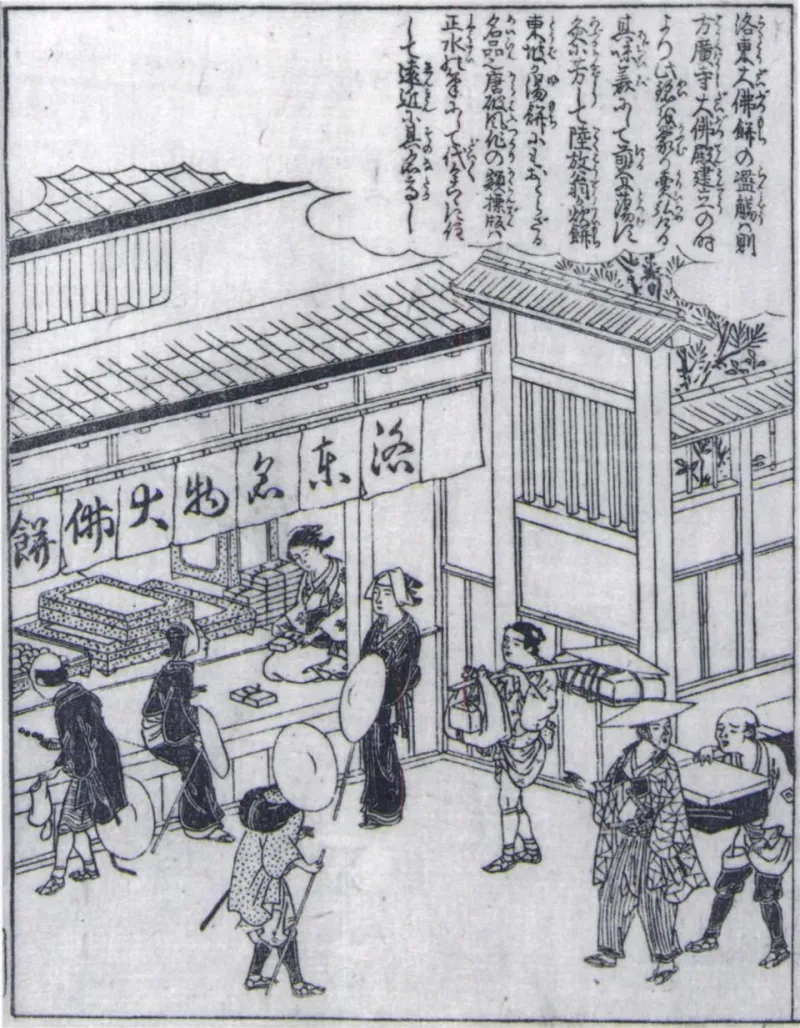
Photo: Shunchosai Takehara Nobushige, Public domain, via Wikimedia Commons
Every candy shop in Shinbashi has the same trap set up near the register: a lacquered box, a fabric wrap, a little paper label with a brushstroke on it, and a price tag that is roughly three times what the contents are worth. It looks like Japan. It photographs like Japan. It is, in our opinion, a bad buy.
This is a guide for travelers who want to bring Japanese candy home and be remembered for the candy rather than for the box.
What omiyage is actually for
Omiyage is a souvenir gift, but the social function is narrower than Americans usually assume. It's not a grand gesture — it's a small, shareable thank-you that says "I was somewhere else and thought of the group." The classic phrase that accompanies it, roughly translated, is "it's nothing special, but…" That's the register you're aiming for. Modest, edible, and enough for everyone.
That means three things matter more than beauty: portions, individually wrapped pieces, and a flavor that doesn't require explanation. A single gorgeous confection in a silk pouch fails all three. A bag of thirty wrapped candies nails all three.
The box tax
Here's the math. A decorative boxed assortment at a nice Shinbashi shop might run 2,500 to 4,000 yen. A bag of individually wrapped shop candies, made by the same shop, might run 500 to 900 yen for a comparable amount of actual candy. You are paying the difference for cardboard, printing, and a ribbon.
That's not always a swindle — gift boxes have their place, and Japanese packaging is genuinely a craft. But if your goal is "my coworkers should taste something great from Tokyo," the box is a tax on your own generosity. Buy the everyday sweets and put them in a ziplock with a note. Nobody has ever been disappointed by that.
The case for the everyday shelf
The everyday shelf — the part of the shop aimed at locals buying a snack, not at tourists buying a present — is where the value lives. Look for:
- Bulk bags of individually wrapped candy. Hard drops, milk candy, kinako-coated pieces, yuzu candies. Cheap, light, and safe in a suitcase.
- Imo kenpi. Sweet potato sticks in a sugar shell. Loud crunch, mild flavor, and it reads as exotic without being scary. Roughly 300–600 yen a bag.
- Amezaiku-style hard candies. Glossy, colorful, often sold in small clear bags. Good for kids, good for the office, and basically indestructible.
- Small sealed yokan. Heavier, but sliceable and shareable if you're gifting a household rather than a break room.
What to skip: fresh soft wagashi (a two-day lifespan), anything in a box you can't see through (you're buying a box), and single premium pieces meant to be eaten within hours.
Three gifting scenarios, three answers
The office. You need volume and no mess. Buy two bags of wrapped hard candy, ideally two different flavors so people can choose. Keep it in your carry-on so it doesn't get crushed, and hand it over with a completely unnecessary apology about how it's nothing special. That's the correct move.
The host. You need something that feels considered. One bag of good wrapped candy plus one small sealed block sweet — a yokan or a pressed sugar assortment — is plenty. Avoid anything that needs refrigeration or slicing precision.
The candy nerd. This is the one person you can spend real money on. Find the shop's most specific seasonal item, ask what it is, and buy a small quantity. The story is the gift.
Etiquette in sixty seconds
Give the bag, not the loose candy. Keep the shop's paper bag if it's clean; it reads as cared-for. Remove price stickers — many shops will do this for you if you say it's a gift. Avoid giving four or nine pieces if you can help it; both numbers carry unhappy associations in Japan. And if you're gifting someone senior to you at work, hand it over at the end of the day rather than making a production of it.
Suitcase reality check
Sealed hard candy and individually wrapped pieces cross borders without drama. Don't pack anything fresh, soft, or fruit-filled without checking US rules, and declare food if a form asks — a bag of candy is not contraband, but an undeclared bag of something is a headache. Keep sweets in your carry-on if the weather is warm at either end; chocolate and soft candies do not enjoy a layover in Dallas in July.
Weight matters too. Candy is heavy relative to its size. Two kilos of hard candy will take up space you'd rather give to coffee beans, so buy the light stuff first and the heavy block sweets last.
The shortlist
- Wrapped hard candy from a local shop — 500–900 yen, maximum shareability.
- Imo kenpi — under 700 yen, crunchy, unmistakably Japanese to a first-timer.
- Yuzu or plum drops — sharp, adult, and a good gift for someone who doesn't like things too sweet.
- One small sealed yokan — 800–1,500 yen, for a host rather than a break room.
Buy the plain bag. Spend the difference on a second bag. Your coworkers will remember the flavor long after the lacquered box has gone into a closet.