Fifteen Hundred Yen, One Sweet Tooth: A Shinbashi Candy Crawl for Thrifty US Snackers
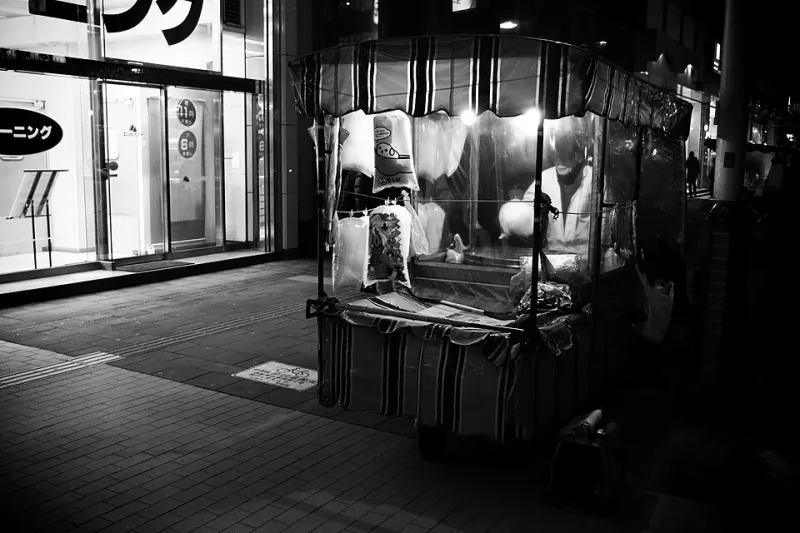
Photo: MIKI Yoshihito, CC BY 2.0, via Wikimedia Commons
Ten bucks doesn't buy much at a US airport newsstand. In Shinbashi, it buys a small mountain of sweets — if you know which doors to walk through. This is the ten-dollar challenge: a ¥1,500 ceiling, one afternoon, and a tote bag that ends up heavier than you expect.
The Ground Rules
First, the math. At recent rates, ¥1,500 lands somewhere around ten US dollars, and because Japan's consumption tax is baked into shelf prices, the number on the tag is the number you pay. Small candy shops are often cash-only, so bring coins and a few thousand-yen notes; the kiosks inside the station take IC cards. Second rule: don't buy everything in one place. The fun of this crawl is the drift between styles — a station kiosk, a basement food hall, a wooden-shelved shop that hasn't changed its sign in decades.
Start at the SL Plaza, the plaza on the Shiodome side of the station where the old steam locomotive sits. It's the neighborhood's living room, and it's a good orientation point before you head into the tangle of lanes toward the Karasumori side.
Stop 1: The Kiosk Warm-Up (¥200–¥400)
Station kiosks are the Japanese equivalent of a CVS candy aisle, except the packaging is better and the portions are smaller. Look for a bag of kinako ame — hard candies dusted in roasted soybean flour. It tastes like the inside of a peanut butter cookie, if that cookie were crunchier and less sweet. A small bag runs ¥200–¥300. Compare it to a share-size bag of Haribo at a US gas station: similar price, wildly different chew.
Grab a pack of konpeito, the tiny star-shaped sugar pellets that look like the candy equivalent of Pop Rocks without the fizz. They crunch, then dissolve. In the US you'd pay three or four dollars for an imported box; here, ¥250 gets you a generous pouch.
Stop 2: The Basement Food Hall Detour (¥300–¥500)
Shinbashi's department-store food halls — and the ones a short walk away in Shiodome — are where budget shoppers get humbled and then rewarded. Skip the ¥3,000 fruit and go straight to the small packaged sweets.
Mini yokan — dense sweet bean jelly — are sold in single-serving bars for ¥200–¥350. Texture-wise, think of a very firm fruit jelly or a fig bar with the sweetness turned down and the earthiness turned up. The matcha version is the gateway drug. An American candy bar is engineered to be gone in four bites; yokan is engineered to be sliced and shared with tea, which is why it feels expensive even when it's cheap.
Stop 3: The Old-School Candy Counter (¥200–¥400)
Push deeper into the side streets and you'll find the kind of shop that sells candy out of shallow wooden trays, priced per scoop. This is where the ten-dollar bill does its best work.
- Kuro ame (black sugar candy): dark, molasses-heavy hard candy, ¥200–¥300 a bag. It's the closest Japanese cousin to a Werther's Original, but rounder and less buttery.
- Nodo ame (throat candy): herb-and-honey drops, often sold in tins. ¥250–¥400. Think Ricola, minus the medicinal punch.
- Mizuame-based chews: sticky, mild, and usually wrapped in paper twists. ¥150–¥250.
Buy two, not five. The shopkeepers are patient, but a bag of each adds up fast.
Stop 4: The Seasonal Grab (¥150–¥300)
Every shop has a rotating seasonal item — chestnut in autumn, plum in spring, ginger in winter. These are usually the cheapest things on the shelf and the most fun to taste blind. Pick one you can't identify and ask. A single seasonal candy pack runs ¥150–¥300 and makes a better story than a fridge magnet.
What ¥1,500 Actually Buys
A realistic haul: kinako candy (¥280), konpeito (¥250), two mini yokan (¥500), a bag of kuro ame (¥260), and one mystery seasonal pack (¥200). Total: ¥1,490. You'll walk out with five small packages, a receipt, and about ten cents of breathing room.
Tasting Notes for American Palates
Japanese candy tends to be less sweet and more textured than its US counterpart. Where a Snickers leans on sugar and salt, kuro ame leans on depth. Where a bag of Skittles is uniform, a bag of konpeito is a study in crunch. Hard ame in Japan is often designed to be sucked slowly — the packaging frequently says so — and the flavors are quieter: roasted soy, brown sugar, green tea, salt plum.
The other adjustment is portion size. Japanese sweets are routinely sold in small, resealable, individually wrapped formats, which makes them easy to carry and easy to share. In the US, we buy a giant bag and regret it by Thursday. Here, you buy a modest bag and finish it on the train.
Practical Notes Before You Go
- Don't eat while walking. It's not illegal, but it's a small courtesy that locals notice.
- Bring a small bag. Candy packaging is light but bulky.
- Check the label for 賞味期限 (best-by date). Most hard candy lasts months; yokan is shorter.
- Keep yokan cool. It's fine in a backpack in November, less fine in August.
- Customs: Commercially packaged, shelf-stable candy is generally fine to bring into the US, but declare food items if asked.
The ten-dollar challenge isn't really about saving money. It's about buying five small things instead of one big thing — and letting a neighborhood you'd otherwise walk past explain itself one wrapper at a time.