Start With the Salty End: A Shinbashi Tasting Route for Chip-and-Dip Snackers
Photo: Daderot, CC0, via Wikimedia Commons
There is a certain kind of US snacker who opens the pantry and reaches straight past the chocolate. They want salt, crunch, acid, heat. A bag of tortilla chips and a jar of salsa counts as dinner in their house, and dessert is often just a second round of the same. If that sounds familiar, a Japanese candy counter can feel like the wrong room at the party: pastel boxes, sugar-dusted everything, not a single thing that scratches the savory itch.
Here is what the shelves do not announce. A meaningful share of what Shinbashi's sweets shops sell barely qualifies as candy in the American sense. Salt is a structural ingredient in Japanese snacking, not a garnish, and a lot of the traditional items sit exactly where salt and sugar meet. Which makes these counters a better on-ramp than a wall for the chip-and-dip crowd — provided you walk the route in the right order.
Rule One: Start Where the Salt Is
The mistake most first-timers make is ordering by looks. The prettiest thing in the case is almost always the sweetest, and if you start there, your palate reads the whole shop as one flavor: sugar. Go the other direction. Begin with the palest, plainest, least decorated item you can find and let your tongue recalibrate before you climb.
Build the climb in three stops — roughly twenty to thirty minutes of shopping if you take your time. Budget about a thousand yen, under ten dollars, for the whole loop. That is the other nice thing about doing this on foot instead of online.
Stop One: Shio Ame, the Least Exciting Thing on the Shelf
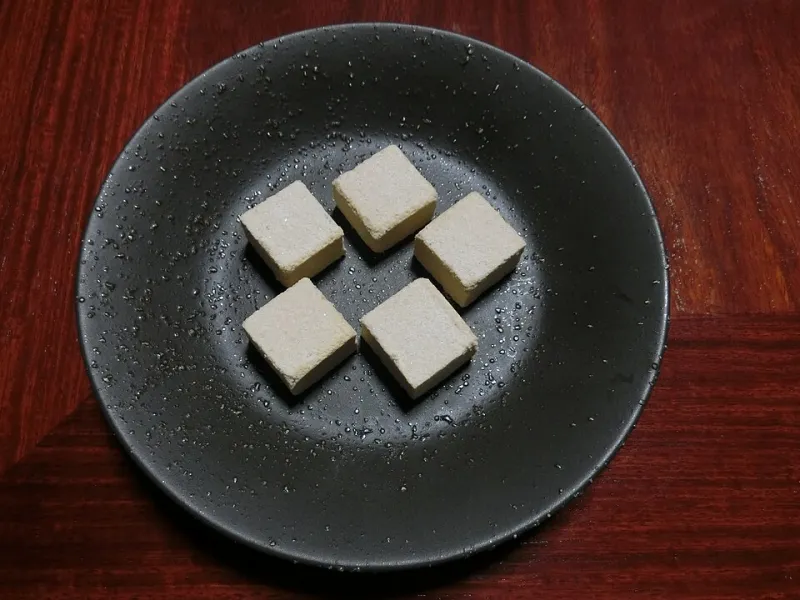
Shio ame is salt candy: a hard, translucent, faintly cloudy piece that looks like it came from a completely different era of confectionery, because it did. It is barely sweet. There is a mineral edge to it, a little salinity that lands halfway back on your tongue, and it dissolves slowly enough that you notice the texture changing as it goes.
For a Doritos person, this is the honest handshake. It costs almost nothing, it is usually sold in small bags or loose by the scoop, and it teaches you the thing you need to know about Japanese candy: sweetness here is often a background note, not the headline. Buy a small bag. Eat two pieces. Save the rest for the train.
Stop Two: Miso Caramel, Where the Line Blurs
Now go sweeter, but keep the salt in the room. Miso caramel — sometimes a soft chew, sometimes a wrapped square, sometimes a filled wafer — is the crossover hit of the whole genre. Miso brings a fermented, almost brothy depth that does to caramel what a pinch of flaky salt does to a chocolate chip cookie, except turned up several notches.
This is the piece that tends to convert people. If you have ever dunked a pretzel in caramel, or eaten salted caramel ice cream and thought it could handle more salt, buy two. Ask which one is the darkest; the darker the miso, the more savory the finish.
Stop Three: Soy-Glazed Senbei, the Crunch That Closes the Deal
Rice crackers are where savory-first snackers stop feeling like tourists. A senbei brushed with soy sauce and mirin and then grilled comes out glossy, salty, faintly smoky, with a shatter that will remind you of a thick-cut potato chip. Some are wrapped in a strip of nori; some are dusted with chili; some are glazed twice. Arare — the smaller, darker, soy-coated rice pellets — are the same idea in bite-size form and travel better in a pocket.
Buy a mixed bag. Compare a pale one and a dark one side by side. The dark ones are usually the bold, umami-heavy end of the range, and that is exactly where a chip eater wants to land.
The Return Trip
Once you have been to the salty end, the sweet end reads differently. Konpeito stops tasting like pure sugar and starts tasting like sugar with structure. A bean paste sweet stops being cloying and starts being a contrast. Walk back through the case after your three stops and pick one thing you would have grabbed an hour earlier — a fruit jelly, a chocolate, something pink — and see whether it lands better. It usually does.
Shopping Notes for a First Visit
- Cash still rules at the smallest counters, though more shops take cards than they used to. Carry a few thousand yen in small bills.
- Packaging is often by weight or by the bag, not by the piece. Point, hold up fingers, smile. Nobody expects a speech.
- Ask before eating on the street. Many shops would rather you waited; some will point you toward a spot. Rice crackers are fine, hard candy is fine, anything with a wrapper can wait.
- If you find a shio ame you like, buy three bags. They are cheap, they weigh nothing, and they are the least likely thing in your suitcase to melt, crush, or get confiscated.
The chip-and-dip palate is not a limitation. It is a starting position. Shinbashi's candy shops are built on the assumption that salt and sweet belong on the same plate — that is why the shelves hold both, often in the same wrapper. Start at the salty end and work your way in. By the time you reach the pink stuff, you will have stopped thinking of it as a different food group.