One Hour, Four Exits: A Shinbashi Station Candy Run for Tight Connections
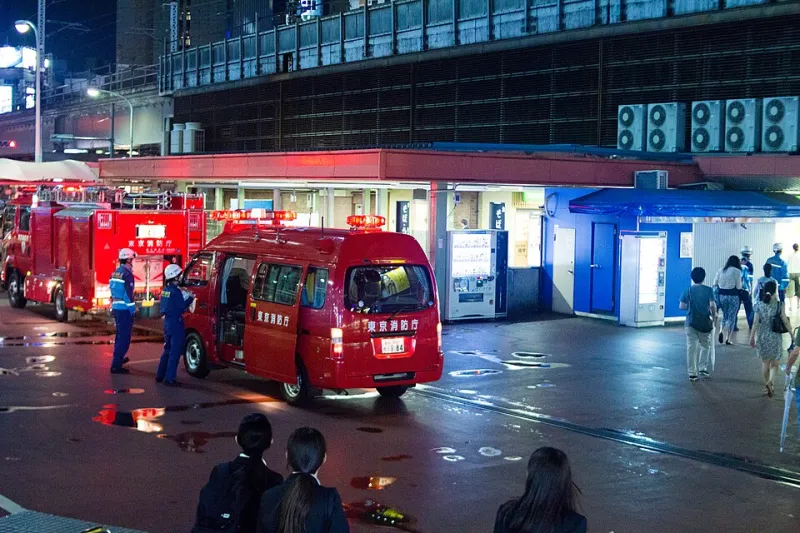
Photo: Dick Thomas Johnson, CC BY 2.0, via Wikimedia Commons
Shinbashi Station is not a shopping mall with a train problem. It is a working station with several different neighborhoods stitched underneath and around it. That matters for candy shopping. If you treat the place like an airport concourse and wander toward the first shiny counter, you will spend your hour walking in circles and end up with a bag of something you could have bought at home.
The better move is to pick an exit first and a candy type second. Think of the station as a compass, not a catalog. You are not trying to see everything. You are trying to make one small, sensible purchase that survives the next train, the next hotel room, and the flight home.
First, the name on the sign
You will see both Shinbashi and Shimbashi. The site you are reading uses Shinbashi; station signage and maps often use Shimbashi. Same place. Do not let the spelling variation send you back to Google in a panic. Look for the JR gates, the subway signs, and the exit names. In late 2026, the station is still a web of passages, so a quick photo of the map board near your ticket gate is more useful than memory.
One practical note for US travelers: Shinbashi is not laid out like a single-level suburban transit hub. Exits can lead to office blocks, underground walkways, or streets that feel like a different district. That is the charm and the trap. Choose one exit. Buy one bag. Return the way you came.
The one-hour math
Sixty minutes sounds generous until you subtract orientation, walking, and the small panic of wondering whether your platform is on the other side of the station. Use a simple budget:
- 5 minutes to find a station map and confirm your exit
- 15 minutes to walk to the exit and browse one or two counters
- 15 minutes to buy and pack
- 15 minutes to return to the gates
- 10 minutes of buffer for wrong turns
If you have less than forty minutes, do not leave the station proper. A kiosk bag of individually wrapped candy is a perfectly good Shinbashi souvenir. If you have a full hour, take one exit. Not two. Not four. One.
Exit-by-exit cheat sheet
This is a map by candy type, not a list of specific shops. Store names change; exits and neighborhoods are more stable. Use the station signs and your own eyes.
| Exit area | What it feels like | Candy type worth stopping for | Why it works on a tight connection |
|---|---|---|---|
| Karasumori Exit side | Office towers, buses, a steady stream of commuters | Individually wrapped hard candy, mint tablets, throat drops | Fast to buy, easy to share, and unlikely to crush in a backpack |
| Hibiya Exit side | Near the SL Plaza and the edge of Ginza | Karinto, rice crackers, savory-sweet crunch mixes | Sturdy, tea-friendly, and more interesting than a plain chocolate bar |
| Shiodome Exit side | Underground walkways and glassy towers | Small boxes of assorted traditional sweets, bean-paste candies | Better packaging for gifts, with counters that reward a quick browse |
| Ginza Exit side | Toward Ginza, with more polished storefronts | Fruit chews, sugar-coated nuts, small bags of soft candy | Good for a sweet-tooth traveler who wants one tidy bag, not a haul |
A word of caution: do not chase a specific store name from an old blog post. Counters move, shops close, and station passages get renovated. The exit and the candy category are the reliable parts. If you see a small shop with a tidy counter and a line of locals, that is a better signal than a faded map pin.
A sixty-minute route that does not become a crawl
Start at the JR ticket gates and decide what the candy is for. If it is a desk gift for coworkers, take the Karasumori side and look for individually wrapped hard candy. If it is for your hotel room tea, take the Hibiya side and look for karinto or rice crackers. If it is raining and you want to stay underground, follow the Shiodome signs and browse the walkway counters. If you want something that feels a little more Ginza, take the Ginza side and keep it to one small bag.
Then stop. This is the part where travelers get into trouble. Shinbashi has enough sweets to turn a one-hour connection into a three-hour crawl, and a crawl is exactly what you do not need when a train is waiting. Buy two small bags at most: one to eat now, one to carry home. If you cannot decide, buy the smaller bag. You can always come back on another trip.
Small-bag rules for US travelers
- Buy by weight or by the small prepacked bag. A 100- to 150-gram bag is plenty for a first purchase.
- Choose hard candy, karinto, rice crackers, or individually wrapped sweets if you are worried about heat and pressure. Chocolate is a bad seatmate in a warm train car.
- Check the package for crush risk. Soft sweets and delicate wagashi can arrive home looking like a geography lesson.
- Keep receipts and sealed packaging if you plan to bring candy home. US customs rules are not a candy free-for-all, but sealed commercial sweets are usually simpler than homemade or fresh items.
- Do not overbuy because the yen price looks small. A cheap bag that you never finish is still clutter.
What to skip on a one-hour stop
Skip the giant lacquered gift box. Skip anything that needs refrigeration. Skip the beautiful fresh sweet that is meant to be eaten within a day if you are about to board a train. And skip the urge to buy a little of everything. A tight connection rewards focus, not volume.
The honest recommendation for a first-timer with one hour is the least glamorous one: pick the exit closest to your platform, buy one small bag of wrapped candy or karinto, and get back through the gates with time to spare. Shinbashi candy culture is worth a leisurely visit, but a leisurely visit is a different article. Today you are a traveler with a train to catch. Act like it, and the candy will taste better for it.