The Back of the Bag Knows: Shopping Shinbashi Candy by Its Small Print

Photo by Photo by Nicole Sara on Unsplash on Unsplash
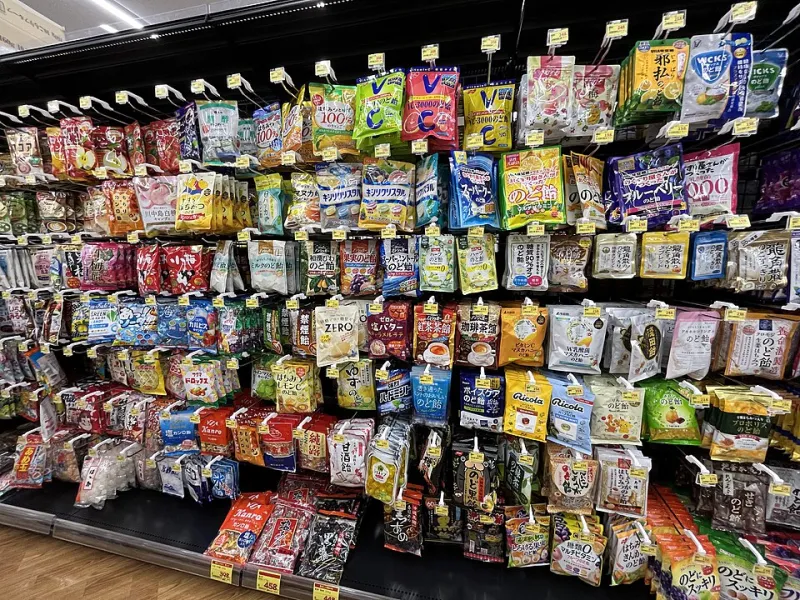
At a Shinbashi candy counter, the front of the package does the selling. The back does the fact-checking. For a US sweets lover browsing rows of glossy bags and shop-labeled stickers, that small print can feel like a pop quiz in Japanese. The good news is that you do not need fluency to shop well. You need a scanning order.
Label-reading is a budget skill as much as a language skill. It keeps you from buying a 300-gram bag of something that clashes with an allergy, melts in your hotel room, or tastes like a texture you did not sign up for. Think of the back of the bag as a tiny product briefing: ingredients, allergens, dates, storage. Learn where each one lives, and the counter gets a lot more relaxed.
Start With the Sticker, Not the Pretty Side
Many Shinbashi candy shops sell loose pieces or small bags with a shop-applied sticker on the back. Packaged goods have a printed back panel. Either way, flip the item over before you commit. Look first for three anchors: 原材料名 (ingredients), 内容量 (net weight), and 賞味期限 or 消費期限 (dates). If the sticker is handwritten, the date may be short-form. That is normal. It is also your cue to check how soon you need to eat it.
Do not open sealed bags to read inside. If the label is only on a display box and you are buying individual pieces, ask the staff for the ingredient information. A translation app and a pointed finger go a long way. Shinbashi counter staff are used to questions, especially from visitors comparing small bags.
Ingredients: The First Three Tell You the Most
The 原材料名 list is ordered by weight, so the first few items are the honest headline. If sugar or 水あめ (starch syrup) leads, expect sweetness and chew. If 米粉 (rice flour) or でん粉 (starch) leads, expect a lighter, cracklier bite. If カカオマス (cocoa mass) or 全粉乳 (whole milk powder) shows up early, you are in chocolate territory.
Common words worth recognizing include 砂糖 (sugar), 小麦粉 (wheat flour), 植物油脂 (vegetable oil), 脱脂粉乳 (skim milk powder), ゼラチン (gelatin), 寒天 (agar), and ペクチン (pectin). Additives often appear after a slash or in parentheses: 香料 (flavoring), 着色料 (coloring), 保存料 (preservative), 甘味料 (sweetener), 膨張剤 (raising agent), 乳化剤 (emulsifier), and 酸味料 (acidulant).
A longer additive list is not automatically a red flag. It often explains texture, shelf life, or why a candy stays crisp in a humid city. For budget shopping, the ingredient list helps you predict whether you will actually finish the bag. A candy that sounds elegant but uses a flavor or texture you dislike is not a bargain, even at 300 yen.
Allergens: The Box Worth Memorizing
Allergen information usually sits in parentheses or a small box marked アレルギー物質 or 特定原材料. Japan's mandatory labeling covers eight major allergens: えび (shrimp), かに (crab), くるみ (walnut), 小麦 (wheat), そば (buckwheat), 卵 (egg), 乳 (milk), and 落花生 (peanut). Soy (大豆) and many others are often listed too, including almond, orange, cashew, sesame, salmon, mackerel, beef, pork, chicken, apple, banana, kiwi, and gelatin.
For US shoppers, the practical move is to learn the symbols and words for your own triggers before you arrive. Milk, wheat, egg, peanut, and soy are the ones most likely to appear in candy. If you have a severe allergy, remember that loose candy and shared scoops can carry cross-contact risk even when the label looks clean. Ask before buying from open bins. A shop sticker may be simpler than a full printed label, and simple is not the same as complete.
Dates: Best Before vs Use By
Japanese labels draw a useful line between 賞味期限 (best before) and 消費期限 (use by). 賞味期限 is about quality: the candy is at its best until that date, but it is not an automatic safety cliff. 消費期限 is about safety and usually appears on fresher items with a shorter window.
Date formats vary. You may see 2027.03, 2027/03/15, 2027年3月, or a compact stamp like 27.03.15. When four digits lead, read year first. When a shop sticker uses a short date, ask if you are unsure. For budget shoppers, the discount shelf is often full of short-date items. That can be a great deal if you are eating the candy this week, and a waste of money if it is going into a suitcase for a month.
The Word Nama Changes Everything
If you see 生 (nama) on a candy label, slow down. It means fresh or raw in the sense of perishable, not raw fish. 生チョコ is fresh chocolate, often soft and cream-based. 生クリーム is cream. 生菓子 is a fresh confection with a short life. These items are delicious, but they usually need refrigeration and should not be treated like hard candy in a carry-on.
Look for 要冷蔵 (requires refrigeration) near the date or storage line. If your hotel room has no fridge, or you are heading straight to the airport, skip it. This is not a failure of shopping nerve. It is label-reading doing its job.
Storage Cues and the Trip Home
保存方法 means storage method. A common line is 直射日光を避け、高温多湿を避けて保存, which asks you to avoid direct sunlight and high heat and humidity. 開封後はお早めに means eat soon after opening. 常温で保存 means room temperature. 冷蔵庫で保存 means refrigerate.
For a US-bound trip, these cues matter more than the pretty tin. Chocolate in a November suitcase is one thing; chocolate in a summer car is another. If a label warns about heat, believe it. A melted candy is still edible, but it is no longer the gift or snack you planned.
A 30-Second Scan at the Counter
Flip the bag. Find 原材料名 and read the first three items. Scan the allergen box for your triggers. Locate 賞味期限 or 消費期限. Look for 生 and 要冷蔵. Check 内容量 against the price so you know what you are paying per gram. Then decide.
That is the whole routine. It turns a wall of tiny type into a shopping shortcut. The front of the bag sells the fantasy; the back tells you whether it fits your snack drawer, your suitcase, and your budget. In Shinbashi, the small print is not a hurdle. It is the most useful thing on the wrapper.